
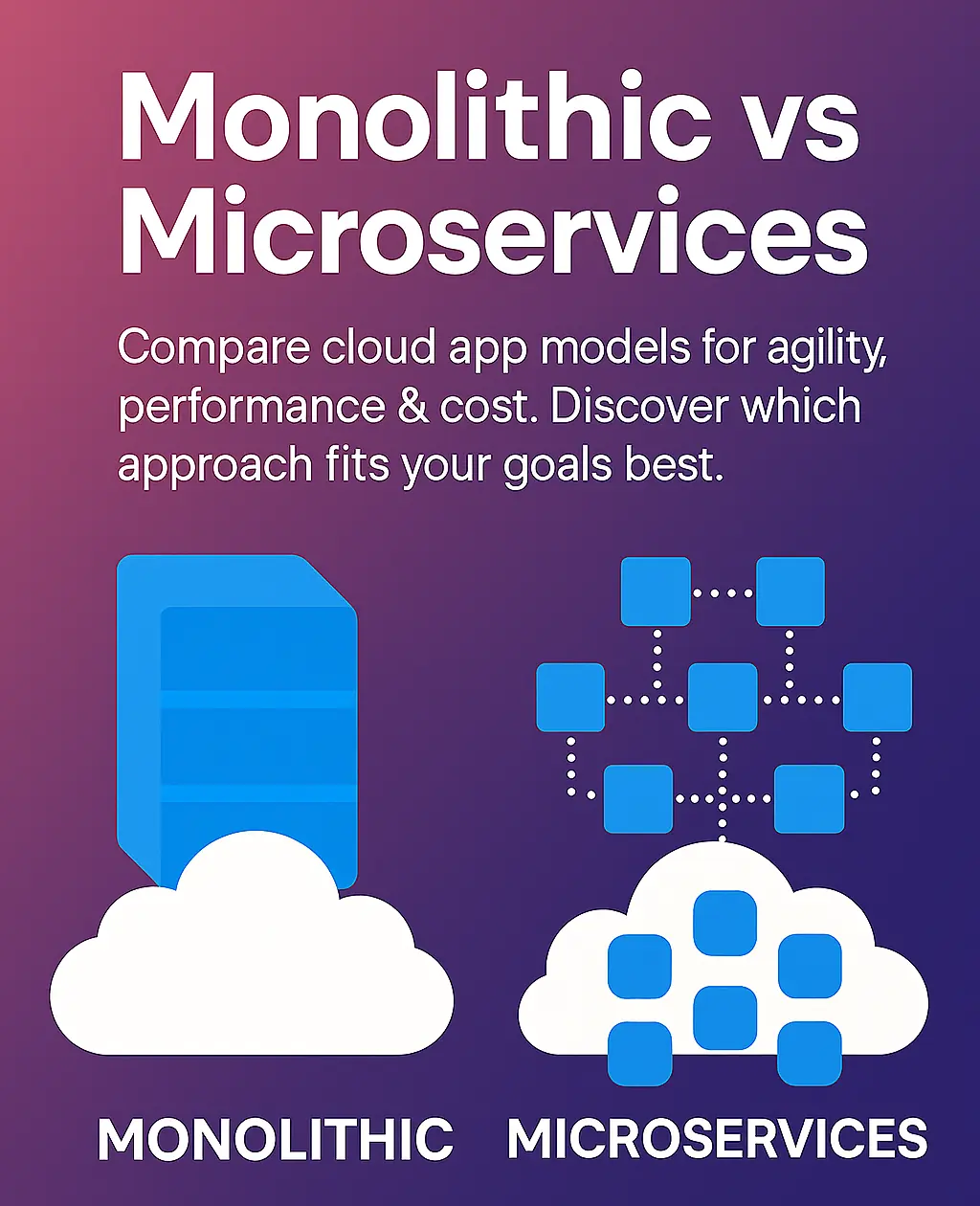
If you’ve ever built or thought about building a cloud app, you’ve probably heard the terms monolithic and microservices architecture. They sound a bit complex, but the core idea is simple: It’s all about how your app is built and how easy it is to grow, update, and manage over time.
At Forged Concepts, we help businesses make smart, future-ready choices through our expert cloud app development services. If you’re just diving in or planning to scale, knowing the pros and cons of each option, microservices vs monoliths, can help you avoid costly surprises down the road.
What is Monolithic Architecture?
A monolithic app is like an all-in-one solution. Everything is bundled into a single code base: the frontend, backend, database logic, etc. If you change one piece, you often have to redeploy the entire thing.
Let’s say you’re building a simple to-do list app. A monolith could handle it just fine. Fast to build. Easy to launch. All your code lives in one place.
However, as your app grows, the monolithic structure can become a hindrance. A small update might break something unrelated. You often have to test and redeploy the whole app for even minor changes.
What are Microservices?
Microservices architecture is the opposite of a monolith. It breaks your app into smaller, independent parts called services. Each service focuses on a single task, such as managing user logins or sending notifications.
These parts work together using APIs, but they don’t share the same codebase. That means you can update or scale one piece without touching the rest.
This is the modern way to build apps in the cloud. In fact, most cloud application development services today use microservices, especially on platforms like AWS.
Many teams choose microservices on AWS because of the control and flexibility it offers. AWS makes it easy to deploy, monitor, and scale individual services.
Microservices vs Monolith: What’s the Difference?
Here’s a side-by-side look at the two:
| Category | Monolithic | Microservices |
|---|---|---|
| Code Base | One big block of code that handles everything | Many small services, each doing one specific task |
| Development | Easy to start; grows harder to manage as features are added | Requires planning upfront; gets easier to maintain over time |
| Changes | One small change can affect the whole system | Changes are isolated to the service you’re updating |
| Deployment | Deployed all at once as a single unit | Each service is deployed on its own schedule |
| Scaling | You must scale the entire app, even if only one part needs it | You can scale only the services that need more resources |
| Debugging | Easier to trace issues in one codebase | Requires checking across multiple services, which can be more complex |
| Best For | Great for small teams, simple apps, or prototypes | Better for larger teams or complex apps that need to evolve and scale |
The microservices vs monolith debate comes down to what your app needs today, and where you want it to go in the future.
When to Use Monolithic Architecture?
A monolithic architecture works well when:
- You’re building something small or simple
- You want to launch fast
- You don’t expect to scale quickly
- You’re working with a small team
Monoliths also don’t require much up-front planning. You can start coding and figure things out as you go.
But as your app grows, changes become harder to manage. A small update might mean retesting the entire app. And if something breaks, everything can go down.
When to Use Microservices
Microservices are great for complex, growing apps. They’re ideal if you:
- Expect the app to scale quickly
- Want faster updates with less risk
- Want long-term flexibility
- Have multiple developers or teams
With microservices on AWS, your services can run independently and scale automatically. You can fix one part of your app without affecting the others. That means faster updates and fewer disruptions.
Planning and managing microservices takes more upfront work, but the payoff is huge in terms of speed, stability, and scalability. This is where trusted cloud application development services can make a big difference, helping you navigate the setup for long-term success.
Which One Should You Pick?
It really depends on your goals. Ask yourself:
- Is this a small, short-term project? - Go monolithic.
- Is this a complex, long-term product? - Microservices are worth the effort.
- Do I need to scale certain parts of the app on demand? - Microservices win again.
If you’re not sure, a hybrid approach might even work. Some companies start with a monolith, then slowly break parts into microservices as they grow.
How Microservices Save Time and Money
Yes, microservices require more setup. But they also:
- Reduce downtime during updates
- Let your team work in parallel
- Scale only what’s needed
- Make it easier to spot and fix issues
Over time, they reduce the cost of maintenance and avoid the need to rebuild your app from scratch. That’s why more and more businesses rely on cloud application development services to design with microservices from the start.
Making the Transition
Already running a monolithic app? No problem. You can gradually move to microservices by:
- Planning what services to split off first
- Containerizing your existing app
- Rebuilding one function at a time as a microservice
- Deploying and testing each one separately
This process takes some time, but it can dramatically improve how your app performs and scales. Our team at Forged Concepts has helped many clients through this exact transition.
Final Thoughts
When it comes to microservices vs monoliths, there’s no “one-size-fits-all.” It all depends on your app, your goals, and your timeline.
At Forged Concepts, we offer expert cloud application development services tailored to meet your needs — whether that’s building a clean monolith, architecting scalable microservices, or helping you transition to modern, flexible cloud infrastructure.
Need help figuring out the best path for your app? Reach out to us. We’d love to hear about your project and help you build something powerful.